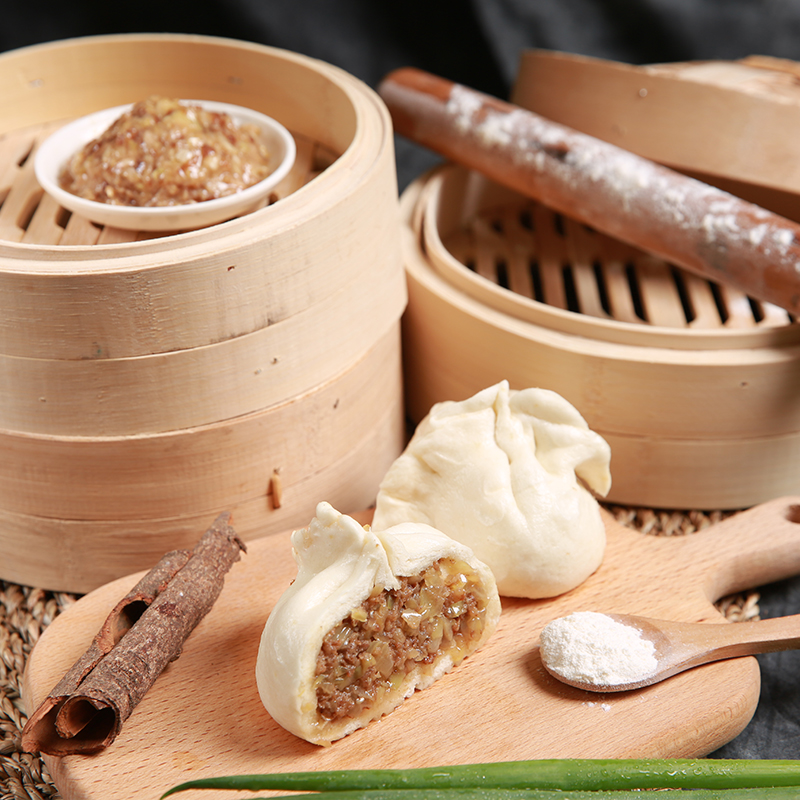
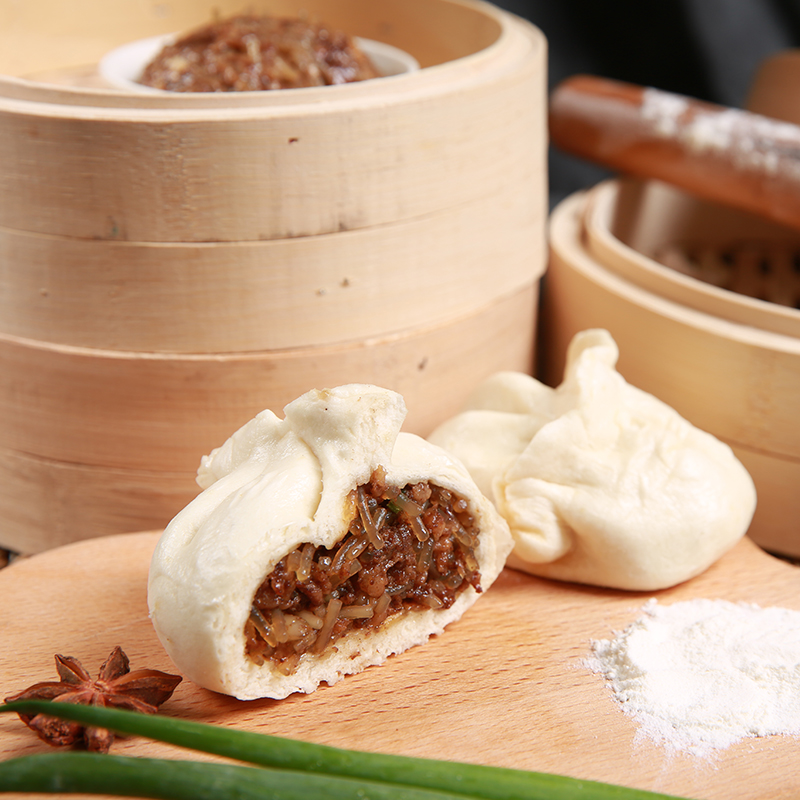
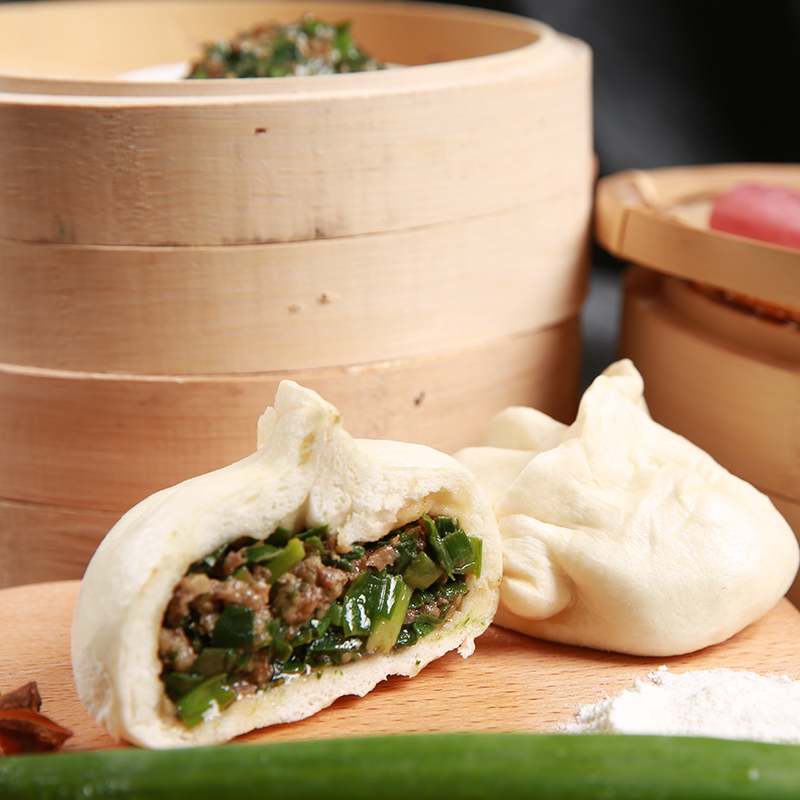
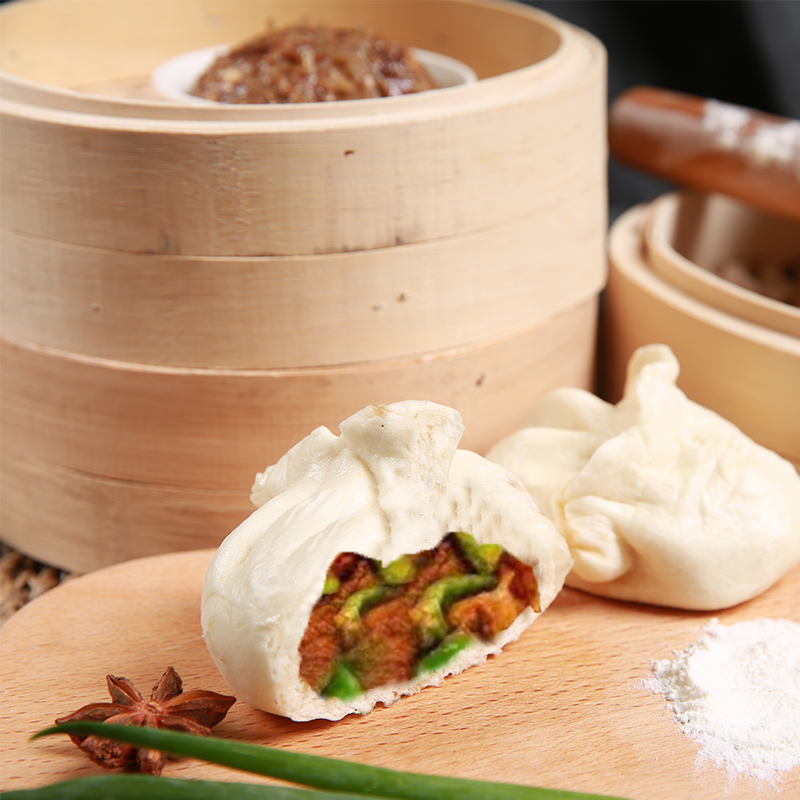
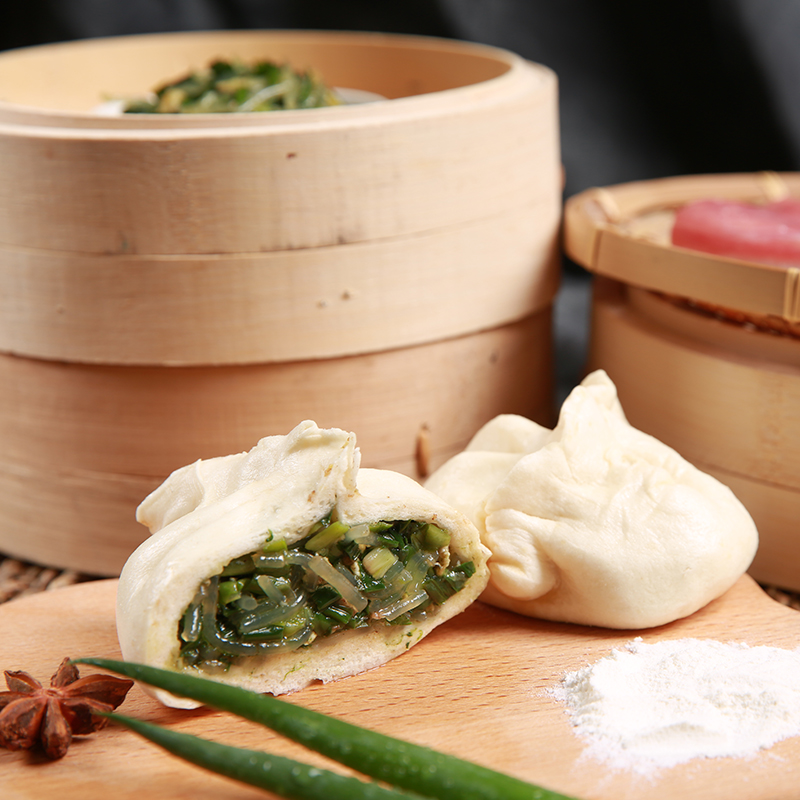
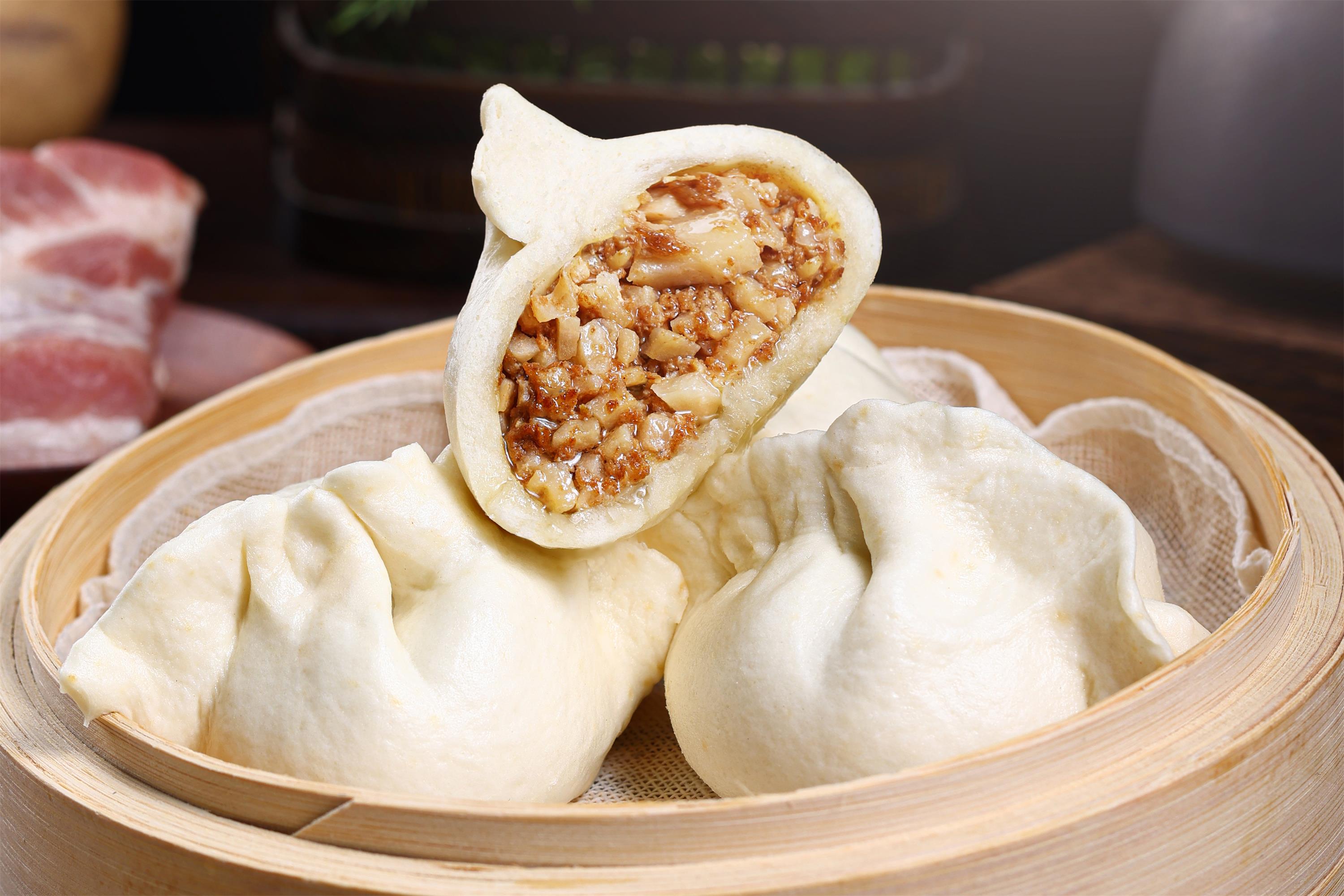
宋代《太平廣記》中記載了一段唐朝逸事:在武周時期,有一位侍御史名叫侯思止。他吃飯時每每叮囑廚師:“與我作籠餅,可縮蔥作。”也就是讓廚師少加點蔥,多加點肉。人們于是送他一個外號,叫“縮蔥侍御史”。可見肉和蔥在唐代便已成為包子餡的經典搭配。
In the "Taiping Guangji" of the Song Dynasty, a Tang Dynasty anecdote was recorded: during the Wu Zhou period, there was a palace attendant named Hou Sizhi. When he eats, he often instructs the chef: "Make a pancake with me, you can make it with scallions." This means that the chef adds less scallions and more meat. So people gave him a nickname, called "Shoucong Shishi". It can be seen that meat and scallions have become a classic pairing of steamed bun filling in the Tang Dynasty.
蔥肉包子在宋代大概也很受歡迎。宋人羅大經《鶴林玉露·鏤蔥絲》中提到,有位士大夫在京城買了個妾室,自稱曾在宰相蔡京府中的包子廚做事。一日,他讓小妾做些包子來嘗嘗,沒想到她推辭說自己不會做。士大夫很不高興:“既然是包子廚里的人,怎么不會做包子?”小妾回答得理直氣壯:“我是包子廚里專門負責切蔥絲的。”一個包子而已,蔡京家的廚房卻能細分出擇菜、切蔥絲、搟皮、包包子等不同工種來,就連小小的蔥絲都要有專人負責,一方面說明蔡京對食物的講究,另一方面也可見宋人喜歡以大蔥入包子餡。
Scallion meat buns were probably also very popular during the Song Dynasty. According to the Song Dynasty scholar Luo Dajing's "Crane Forest Jade Dew - Cut Scallion Silk", a scholar bought a concubine in the capital and claimed to have worked at the steamed bun kitchen in the Prime Minister Cai Jing's mansion. One day, he asked his concubine to make some steamed buns to taste, but she refused and said she couldn't make them. The scholar was very unhappy and said, "Since I am from the steamed bun kitchen, why can't I make steamed buns?" The little concubine replied confidently, "I am the one in charge of cutting scallions in the steamed bun kitchen." Just a steamed bun, Cai Jing's kitchen can be divided into different types of work, such as selecting dishes, cutting scallions, rolling skins, and making steamed buns. Even small scallions need to be handled by a dedicated person, which indicates Cai Jing's emphasis on food, On the other hand, it can also be seen that Song people like to use scallions to fill buns.
不過,蔡京府里的肉包子,未必是豬肉,更有可能是羊肉。唐宋時期,羊肉一直是最常見的肉類,而豬肉的地位相對較低,往往只供平民百姓果腹。
However, the meat buns in Cai Jing's mansion are not necessarily pork, but more likely lamb. During the Tang and Song dynasties, lamb was always the most common meat, while pork had a relatively low status and was often only used as a means of food for the common people.
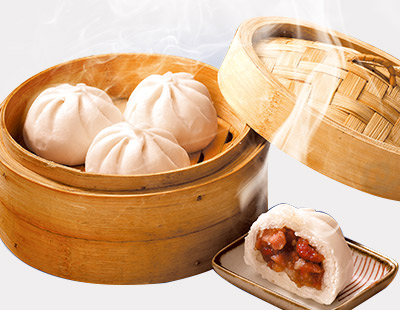
陳文蔚《克齋集》中記載,王安石熱愛羊肉包子,時常邊看書邊吃。因為看得太過入神,也不用筷子,用手拿了就吃,吃得過多也渾然不覺,以至于鬧肚子。
According to Chen Wenwei's "Ke Zhai Ji", Wang Anshi loves lamb buns and often eats them while reading. Because I was too engrossed in it and didn't use chopsticks, I ate it with my hands and didn't even notice it when I ate too much, which led to diarrhea.
“饅頭”原本就是“包子”
"Mantou" was originally "steamed stuffed bun"
關于包子起源,最早的傳說要追溯到先秦時期了。據說商紂王烹殺伯邑考,割去了四肢,萬刃剁尸,做成肉餅(一說肉羹)賜給周文王,來試探一下他到底會不會掐算。文王由卦象得知愛子遭劫,翌日接到早餐卻也裝作渾然不知地吃下以騙取紂王,讓紂王以為文王卜卦只是浪得虛名而已,這就是著名的周文王食子故事。到了《封神演義》里,演變成為紂王將伯夷考做成了人肉包子。當然,這僅僅是一種傳說。因為到了漢代石轉磨發明,人們才開始粒食到粉食,也就是吃上了面粉。
The earliest legend about the origin of baozi can be traced back to the pre Qin period. It is said that King Zhou of Shang cooked and killed Bo Yikao, cut off his limbs, chopped the body with ten thousand blades, and made meat cakes (such as meat soup) to give to King Wen of Zhou to test whether he could calculate. King Wen learned from the divination that his beloved son had been robbed. The next day, he received breakfast and pretended to eat it without knowing it, in order to deceive King Zhou into thinking that King Wen's divination was just a false name. This is the famous story of King Wen's son eating. In the "Romance of the Gods", it evolved into King Zhou turning the Boyi examination into a human flesh bun. Of course, this is just a legend. Because it was not until the invention of the stone mill in the Han Dynasty that people began to eat from grain to powder, that is, flour.
包子這種面食制品大約在魏、晉時便已經出現,但包子的原名卻叫“饅頭”。晉代束皙在《餅賦》中說,初春時的宴會上宜設“曼頭”。 這里所說的“曼頭”其實就是包子。唐人把它叫做“籠餅”。古人把面食統稱為“餅”,如湯面叫做“湯餅”,上籠蒸熟的面點就叫“籠餅”。陸游有詩云:“便覺此身如在蜀,一盤籠餅是豌巢。”其下作注:“蜀中雜彘肉作巢饅頭,佳甚。唐人正謂饅頭為籠餅。”
Steamed buns, a kind of wheaten food, appeared in the Wei and Jin dynasties, but the original name of steamed buns was "Mantou". In the "Cake Fu" written by Shu Xi of the Jin Dynasty, it was appropriate to have a "man head" at a banquet in early spring. The "Mantou" mentioned here is actually baozi. The Tang people call it "cage cake". The ancients collectively referred to pasta as "cake", for example, Noodles in soup were called "soup cakes", and steamed pastries were called "cage cakes". Lu You once said in a poem, "I feel like I am in Sichuan, and a plate of steamed bread is a nest of peas
陸游所說的“饅頭”,其實是包子最古老的名字。相傳最早的“饅頭”是諸葛亮發明的。宋代高承《事物紀原》記載,諸葛亮南征,降服孟獲之后歸來將渡瀘水,忽然風浪大起,人不能過,問當地人,說是猖神作亂,當以人頭投水祭祀。諸葛亮不愿殺生,于是用羊肉和豬肉為餡,包以面皮,做成人頭狀,用以祭神。這一招果然出奇效,“饅頭投水中,風浪乃止”。這一傳說后來被《三國演義》改編化用,從此人盡皆知。
Lu You said "Mantou" is actually the oldest name of steamed bun. It is said that the earliest "Mantou" was invented by Zhuge Liang. According to the "Records of Things" by Gao Cheng of the Song Dynasty, Zhuge Liang, after conquering Meng Huo and returning from his southern expedition, was about to cross the Lushui River. Suddenly, there was a strong storm and people couldn't cross it. He asked the locals and said it was a rampant rebellion by the gods, and they should sacrifice it by throwing their heads into the water. Zhuge Liang did not want to kill animals, so he used lamb and pork as filling, wrapped in dough, and made a human head shape to worship the gods. This move has a miraculous effect. "Mantou is thrown into the water, and the wind and waves will stop". This legend was later adapted and used in "Romance of the Three Kingdoms", and has since been widely known.
還有另外一種說法是,諸葛亮渡瀘水的時間正值農歷五月間,即諸葛亮《出師表》“五月渡瀘,深入不毛”,這是怎么回事呢?原來農歷五月間,瀘水“瘴氣太濃”,而且水中含有毒性物質,士兵們食用了瀘水,出現了患病乃至致死的情況。
Another theory is that the time when Zhuge Liang crossed the Lushui River coincides with the fifth month of the lunar calendar, that is, in Zhuge Liang's "Departure Table", "Crossing the Lushui River in the fifth month, without any hair". What is this? It turned out that in the fifth month of the lunar calendar, the water in Lushui had a strong "miasma" and contained toxic substances. Soldiers who consumed the water in Lushui experienced illness and even death.
諸葛亮經過冥思苦想,下令讓士兵們殺豬宰牛,將牛肉和豬肉混合在一起,剁成肉泥,和入面里,做成人頭形狀蒸熟了,讓士兵們食用。結果很快就消除了士兵們的疾病,這樣一來,瀘水周圍百姓們就傳開了,說諸葛亮下令做的人頭形的“饅頭”可避瘟邪。
After much contemplation, Zhuge Liang ordered the soldiers to kill pigs and cows, mix beef and pork together, chop them into meat paste, mix them into noodles, and steam them in the shape of human heads for the soldiers to eat. As a result, the disease of the soldiers was soon eliminated, so people around Lushui spread the word that the "Mantou" shaped like a human head ordered by Zhuge Liang could avoid pestilence.
 加盟電話400-0531-803





 地址:濟南歷城區工業北路301號
 電話:400-0531-803
 網址:http://www.fitnesstools.cn/